

Accepting new patients · In-person & telehealth
A practical checklist for your next appointment, organized by what matters most: why this medication, how to take it, what to watch for and how to stop safely.
By the Blissz Psychiatry Clinical TeamMedically reviewed by Macbarbara Amaechi, PMHNP-BCPublished November 20, 20268 min read
Quick answer
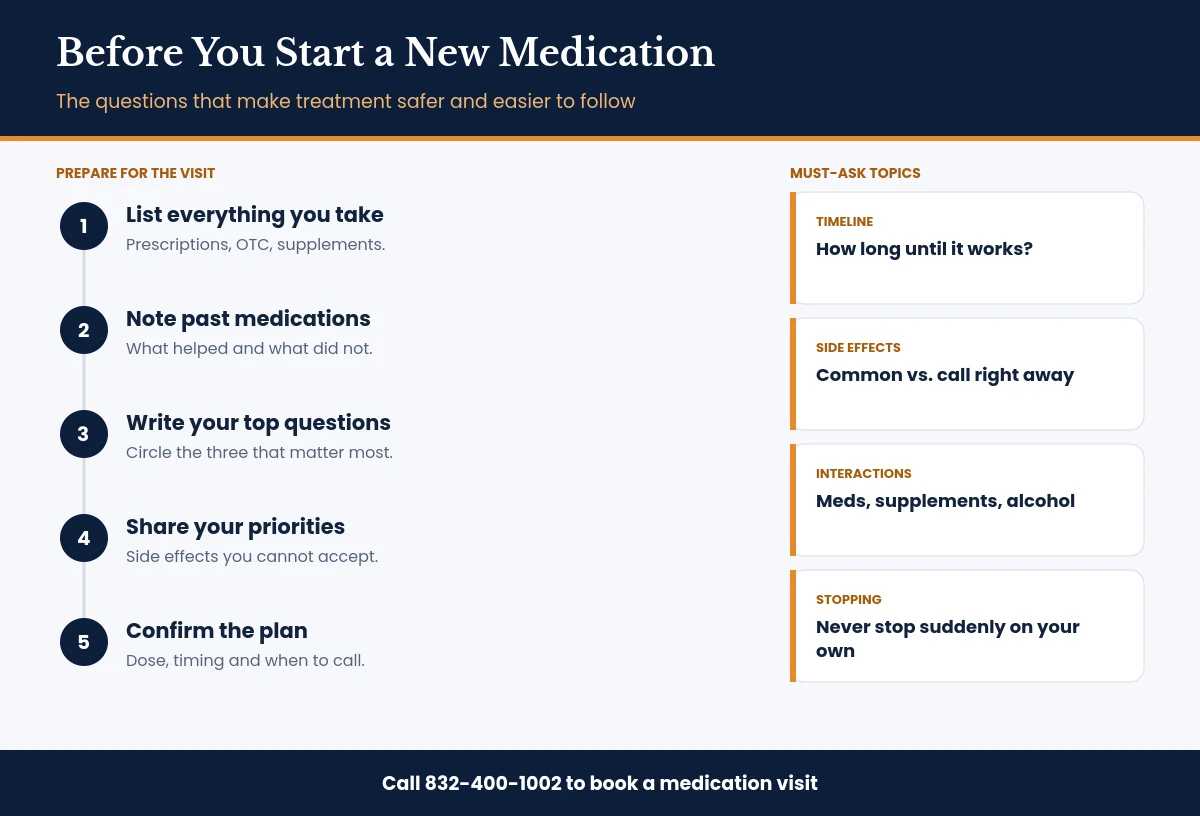
Before starting a new psychiatric medication, ask why it was chosen, how long it takes to work, how to take it, which side effects are common and which need a call, how it interacts with your other medications, alcohol and supplements, and how you would stop it safely if needed. Also ask about cost, monitoring, pregnancy and, for controlled medications, refill rules. Writing your questions down and bringing a full medication list makes the conversation faster and safer.
In this article
Most people who stop a psychiatric medication early do so because of side effects they did not expect, or because it did not seem to work fast enough. Both problems are easier to manage when you know in advance what is normal, what is temporary and what needs attention.
Asking questions is not second-guessing your provider. Shared decisions lead to better results, and a good prescriber expects you to ask. The goal is a plan you understand well enough to follow at home, between visits, when nobody is there to explain it.
Clear answers set realistic expectations. If you know an antidepressant may take four to six weeks, a slow first fortnight is less discouraging.
Talk to a provider
At Blissz Psychiatry, medication decisions are made with you, with time for your questions at every visit.
| Topic | Questions to ask |
|---|---|
| How to take it | What dose, what time of day, with or without food? What if I miss a dose? |
| Common side effects | Which side effects are common, and do they usually fade? |
| Serious side effects | Which symptoms mean I should call right away or seek emergency care? |
| Interactions | Is it safe with my other prescriptions, over-the-counter medicines and supplements? |
| Alcohol and cannabis | How do they affect this medication and my symptoms? |
| Daily life | Can it affect driving, sleep, appetite, weight or sexual function? |
| Monitoring | Do I need blood tests, blood pressure or heart checks? |
Supplements matter more than many people realize. St. John’s wort, for example, interacts with many prescription medications, including some antidepressants. Bring everything you take, not just prescriptions.
When to seek care sooner: If you have thoughts of suicide, severe agitation, a rash with fever, fainting or a seizure after starting a medication, call 911 or go to the nearest emergency room. For mental health crisis support, call or text 988.
Talk to a provider
Book a visit in person or by secure video, and bring your list. We will go through every question.
People close to you often notice changes before you do, both improvements and warning signs. With your permission, a family member or partner can join part of the visit or help you remember the plan. Useful questions for them include:
Sharing information with family is your choice. Your provider will only discuss your care with others when you give permission, except in an emergency where safety is at risk.
Ask how you would stop the medication if it does not work or causes problems. Some psychiatric medications, including many antidepressants and benzodiazepines, should be reduced gradually because stopping suddenly can cause withdrawal or discontinuation symptoms, or a return of the original condition.
The rule is simple: do not stop on your own, even if you feel better. Feeling better is often a sign the medication is working. Call your prescriber, who can plan a safe taper or a switch. If your current prescriber is changing, our guide to transferring psychiatric care explains how to avoid gaps.
If a medication is too expensive, say so. There is often an equally appropriate, lower-cost option. For visit costs, see our guide to verifying your out-of-pocket costs. Ongoing follow-up through medication management is where these questions get revisited as your needs change.
It varies. Many antidepressants and anti-anxiety medications take several weeks to reach full effect, while some, such as stimulants for ADHD, act within hours.
Ask your prescriber about your specific medication. For many, you take the missed dose when you remember unless it is almost time for the next one, but never double up without advice.
Alcohol can worsen depression, anxiety and sleep, and interacts with many medications. Ask your prescriber about your specific medication.
Many common side effects, such as mild nausea or headache, fade in the first weeks. Report any side effect that worries you or does not improve.
Some supplements, such as St. John’s wort, interact with prescription medications. Tell your provider about everything you take.
Talk to your prescriber first. Feeling better often means the medication is working, and stopping suddenly can cause withdrawal or relapse.
Your next step
Clear answers, careful monitoring and a provider who listens. Call our office or book online.
About this article
Written by the Blissz Psychiatry Clinical Team and medically reviewed by Macbarbara Amaechi, PMHNP-BC, a board-certified psychiatric mental health nurse practitioner who provides psychiatric evaluations, medication management and supportive therapy in Sugar Land, TX, Seattle, WA, and by telehealth in Texas, Washington and Colorado. We check our articles against the sources listed below and update them when guidance changes.
Medical disclaimer: This article is for general education and is not a substitute for an individual evaluation, diagnosis or treatment. Do not start, stop or change a medication without talking to your prescriber. If you are in crisis, call or text 988, or call 911 in an emergency. Blissz Psychiatry is an outpatient practice and does not provide emergency services.
Keep Reading
Mental Health CareHow Is Medication Management Different From Therapy?How psychiatric medication management differs from therapy: who provides each, what visits look like and when you need one or both. Call 832-400-1002.Nov 21, 2026 · 8 min read
Patient ResourcesHow Do I Transfer My Psychiatric Care to a New Provider?Step-by-step guide to transferring psychiatric care: records, medication bridging, controlled prescriptions and your first visit. Call 832-400-1002.Nov 21, 2026 · 8 min read
Mental Health CareWhat Conditions Can a PMHNP Diagnose and Treat?What a psychiatric nurse practitioner (PMHNP) can diagnose, treat and prescribe, and when a psychiatrist fits better. Call 832-400-1002.Nov 21, 2026 · 8 min readRelated care at Blissz Psychiatry
Now accepting new patients
Tell us how to reach you, then pick your location to choose a time that works.
Prefer to talk? Call 832-400-1002
Step 1 of 2 · Your details
Share a few details and we will help you book with a board-certified provider. It takes about a minute, and no medical details are needed.
Step 2 of 2 · Select your schedule
Please select your schedule: choose a time on the secure booking calendar for the state you will be in during your visit.
Questions or trouble booking? Call 832-400-1002. In crisis? Call or text 988.
Book online
Choose the state you will be in at the time of your visit.