
Accepting new patients · In-person & telehealth
A plain-language walkthrough of the first appointment: the questions you will be asked, why they matter, how to prepare and what you should leave knowing.
By the Blissz Psychiatry Clinical TeamMedically reviewed by Macbarbara Amaechi, PMHNP-BCPublished November 22, 20268 min read

Quick answer
A first psychiatric evaluation is a longer, structured conversation in which a psychiatric provider reviews your symptoms, mental health and medical history, medications, daily functioning and safety, then explains what may be going on and agrees a treatment plan with you. You do not need to know your diagnosis beforehand. Bring a medication list, past records and your top concerns. You should leave with a working impression, clear next steps and a follow-up plan, although an evaluation never guarantees a particular diagnosis or prescription.
In this article
Follow-up appointments focus on what has changed since the last visit. The first evaluation has a bigger job: building a complete picture of you from scratch. Your provider needs to understand not only what you feel now, but how it developed, what has already been tried, and what else in your health and life could be shaping it.
That is why the first visit is longer and why the questions range so widely. A careful evaluation is also what makes later decisions safer. Medication choices, dose changes and referrals all rest on the information gathered here.
At Blissz Psychiatry, every new patient starts with an evaluation, including people who already have a diagnosis or are moving from another prescriber. It gives us our own clinical picture before any treatment decision is made.
Expect questions in several areas. None of them are trick questions, and “I am not sure” is always an acceptable answer.
| Area | Typical questions |
|---|---|
| Main concerns | What brings you in now? When did it start? What makes it better or worse? |
| Symptoms | Mood, anxiety, sleep, appetite, energy, concentration, irritability, intrusive thoughts |
| History | Past diagnoses, therapy, hospital stays, medications and how you responded |
| Medical health | Conditions such as thyroid disease, chronic pain or sleep apnea; current prescriptions |
| Family history | Depression, bipolar disorder, ADHD, anxiety, substance use or suicide in relatives |
| Daily life | Work or school, relationships, stress, routines, support system |
| Substances | Alcohol, cannabis, nicotine, caffeine and other drugs |
| Safety | Thoughts of self-harm or suicide, past attempts, safety at home |
Safety questions are asked of everyone. They are routine, they do not mean anything is assumed about you, and honest answers help your provider choose the safest plan.
Talk to a provider
Book in person in Sugar Land or by secure video. Our office will tell you how much time to set aside and what to bring.
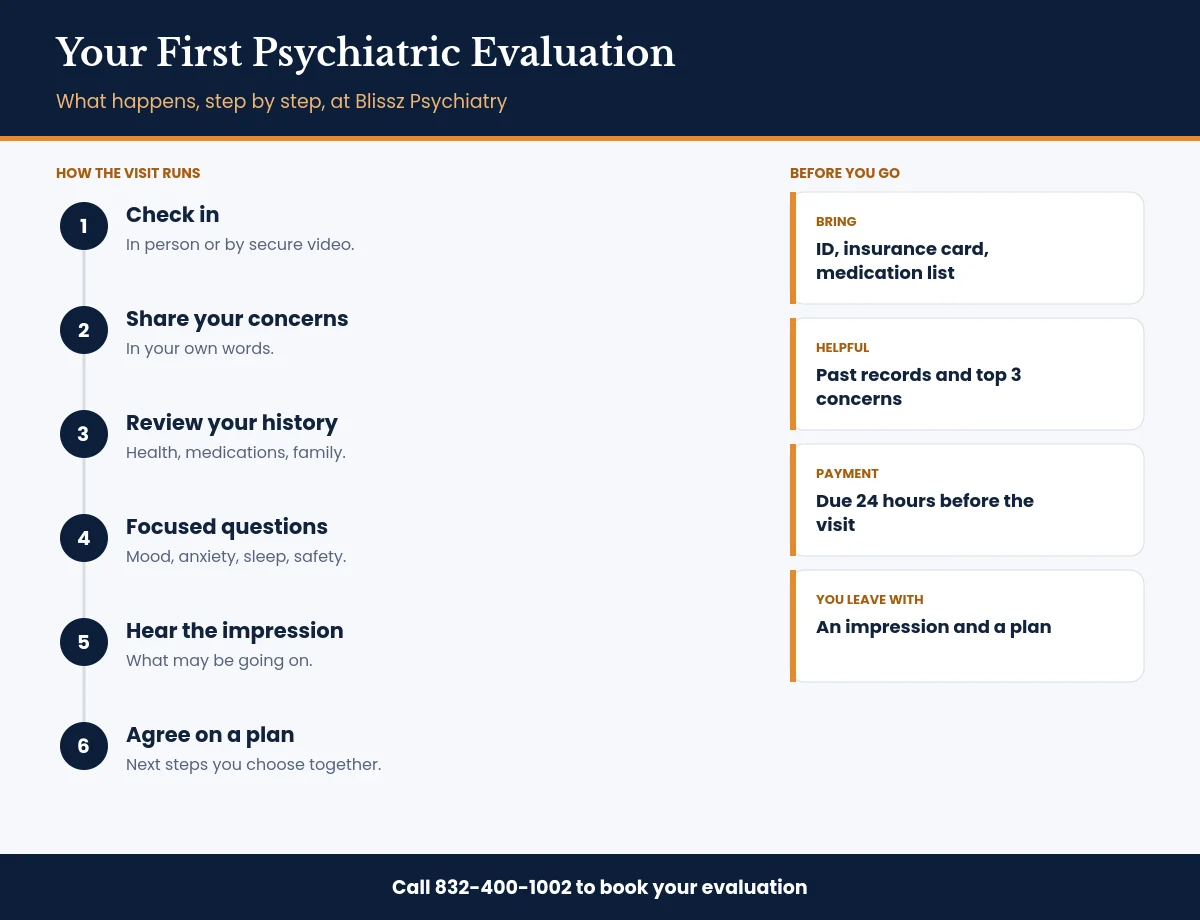
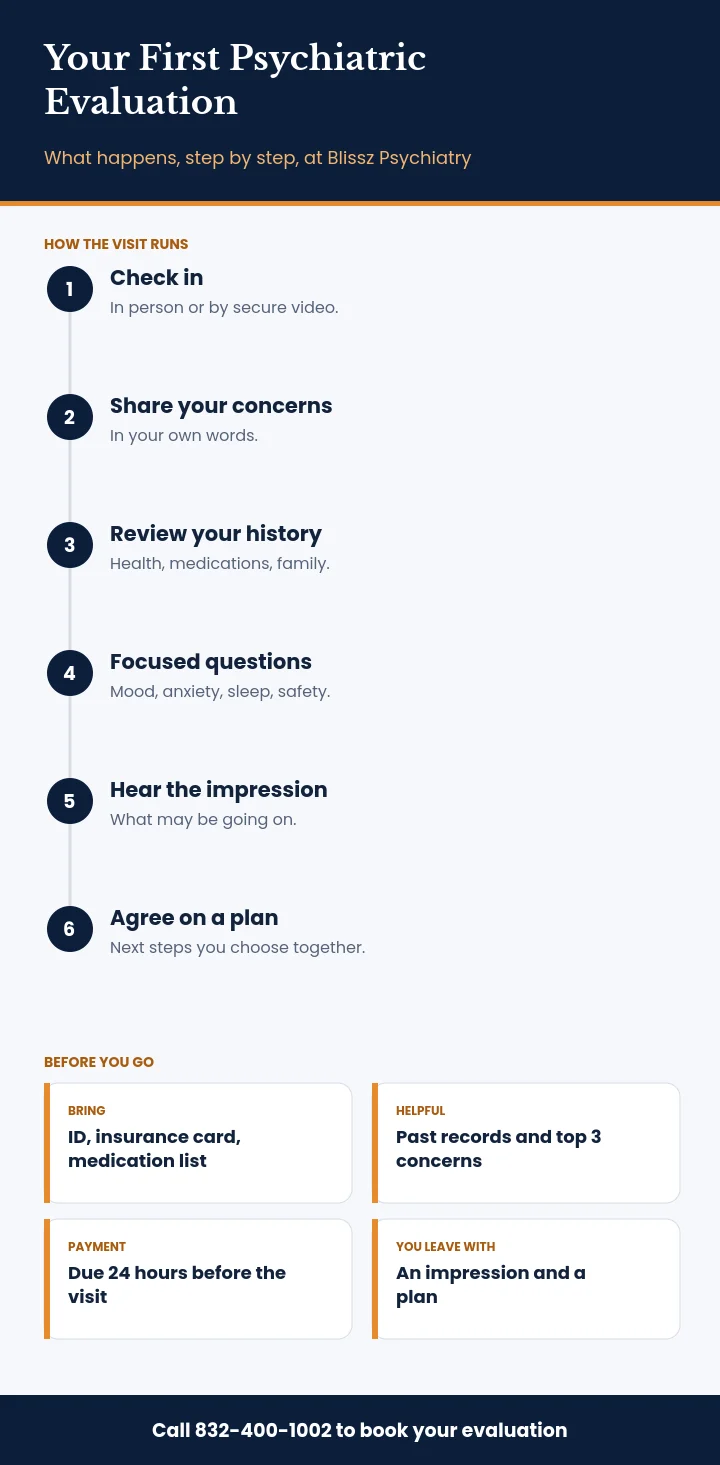
Preparation turns a good evaluation into a great one. Gather these before the visit:
Then write down your top three concerns and any questions you want answered. Many people find it helpful to note examples, such as “missed two deadlines this month” or “awake at 3 a.m. most nights,” because specific examples are more useful than general descriptions.
Tip: If a family member or partner has noticed changes in you, ask them what they have seen. Their observations often fill gaps you cannot see yourself.

Often you will leave with a working diagnosis, but not always. Some conditions are clear after one conversation. Others need more information, such as old records, input from someone who knows you well, objective testing like QbCheck for ADHD, or a few weeks of symptom tracking.
Medication is discussed only if it is safe and appropriate. An evaluation does not guarantee a prescription, and a good provider will explain the reasoning either way. Many plans combine medication with therapy, and some do not involve medication at all. If medication is started, expect closer follow-up at first, usually through medication management visits.
If you leave without a firm diagnosis, that is not a failed visit. It usually means your provider is being careful. Ask what information is still needed, how it will be gathered, and when you will talk next, so the plan feels clear even while some questions remain open.
Talk to a provider
Call the office. We can explain the process, check what your plan needs and find a time that works.
A video evaluation covers the same ground as an in-person visit. The questions, the time and the outcome are the same. What changes is logistics.
Read more in our guide to telehealth psychiatry and state lines.
Many insurance plans cover an initial psychiatric evaluation under outpatient mental health benefits. What you pay depends on your copay or coinsurance and whether you have met your deductible. Blissz Psychiatry accepts most major insurance plans and offers self-pay; call 832-400-1002 for current rates. Payment is due 24 hours before the appointment.
If you are paying without insurance, you are entitled to a written Good Faith Estimate before your visit. Our article on verifying your out-of-pocket costs lists the exact questions to ask your plan.
Longer than a typical follow-up, because it covers your full history. Our office will tell you how much time to set aside when you book.
Many patients book directly. Some insurance plans require a referral or prior authorization, so check with your plan before the visit.
Often, yes, especially if they can describe changes they have noticed. Your provider may also want a few minutes with you alone.
That is common and completely fine. Take your time. Providers expect difficult feelings to come up and will pace the conversation.
Your evaluation is protected health information. With your written permission, we can coordinate with your therapist or primary care provider.
Do not wait. Call or text 988, or call 911 or go to the nearest emergency room if you are in immediate danger.
Your next step
Book a psychiatric evaluation in Sugar Land, in Seattle or by secure video. We will help you understand what is going on and what to do next.
About this article
Written by the Blissz Psychiatry Clinical Team and medically reviewed by Macbarbara Amaechi, PMHNP-BC, a board-certified psychiatric mental health nurse practitioner who provides psychiatric evaluations, medication management and supportive therapy in Sugar Land, TX, Seattle, WA, and by telehealth in Texas, Washington and Colorado. We check our articles against the sources listed below and update them when guidance changes.
Medical disclaimer: This article is for general education and is not a substitute for an individual evaluation, diagnosis or treatment. Do not start, stop or change a medication without talking to your prescriber. If you are in crisis, call or text 988, or call 911 in an emergency. Blissz Psychiatry is an outpatient practice and does not provide emergency services.
Keep Reading
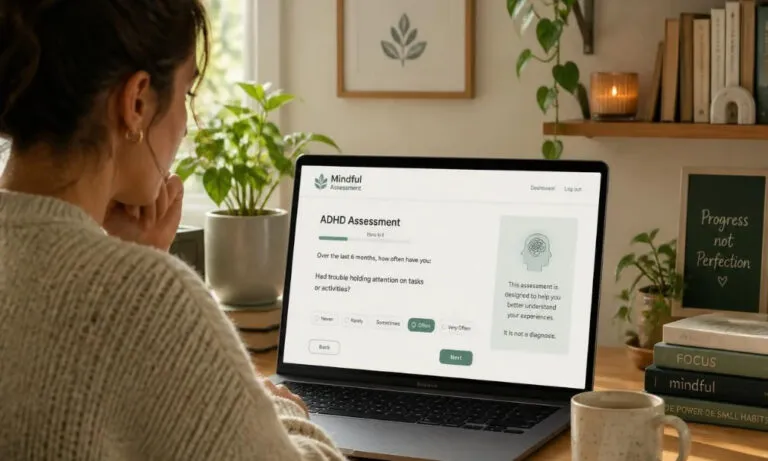 ADHDHow Does QbCheck ADHD Testing Work From Home?QbCheck is a 20-minute, FDA-cleared ADHD test you take at home with a webcam. Learn how it works, how to prepare and what it costs. Call 832-400-1002.Nov 22, 2026 · 9 min read
 Patient ResourcesHow Do I Transfer My Psychiatric Care to a New Provider?Step-by-step guide to transferring psychiatric care: records, medication bridging, controlled prescriptions and your first visit. Call 832-400-1002.Nov 21, 2026 · 8 min read
 Mental Health CareWhat Conditions Can a PMHNP Diagnose and Treat?What a psychiatric nurse practitioner (PMHNP) can diagnose, treat and prescribe, and when a psychiatrist fits better. Call 832-400-1002.Nov 21, 2026 · 8 min read
Related care at Blissz Psychiatry
Now accepting new patients
Tell us how to reach you, then pick your location to choose a time that works.
Prefer to talk? Call 832-400-1002
Step 1 of 2 · Your details
Share a few details and we will help you book with a board-certified provider. It takes about a minute, and no medical details are needed.
Step 2 of 2 · Select your schedule
Please select your schedule: choose a time on the secure booking calendar for the state you will be in during your visit.
Questions or trouble booking? Call 832-400-1002. In crisis? Call or text 988.
Book online
Choose the state you will be in at the time of your visit.