
If you have trouble concentrating, feel restless, have racing thoughts, or constantly struggle to stay organized, you may have wondered whether the problem is ADHD or anxiety. The confusion is understandable. Both conditions can make it difficult to focus, interfere with sleep, affect work and relationships, and leave you feeling mentally exhausted. The difference often comes down to why those symptoms are happening, how they developed, and what tends to trigger them.
Table of Contents
- Quick Answer: ADHD vs Anxiety
- Key Takeaways
- What Is ADHD?
- What Is Anxiety?
- Why Do ADHD and Anxiety Look So Similar?
- ADHD vs Anxiety: What's Behind the Difficulty Concentrating?
- Restlessness and Feeling Unable to Slow Down
- Racing Thoughts: ADHD or Anxiety?
- Worry vs Distractibility
- Physical Symptoms of Anxiety
- Organization, Procrastination, and Time Management
- How ADHD and Anxiety Can Affect Sleep
- Can You Have ADHD and Anxiety at the Same Time?
- What Else Can Cause Similar Symptoms?
- How Do Professionals Distinguish ADHD From Anxiety?
- When Should You Get an Evaluation?
- How Are ADHD and Anxiety Treated?
- ADHD and Anxiety Care in Sugar Land, TX
- Frequently Asked Questions
- The Bottom Line
Important Note
ADHD and anxiety can look remarkably similar, but they are not the same condition. If you have been blaming yourself for being distracted, forgetful, restless, or unable to “turn your brain off,” there may be more going on than a lack of discipline. Understanding the pattern behind your symptoms can help you get the right evaluation instead of trying to treat the wrong problem on your own.
Quick Answer: ADHD vs Anxiety
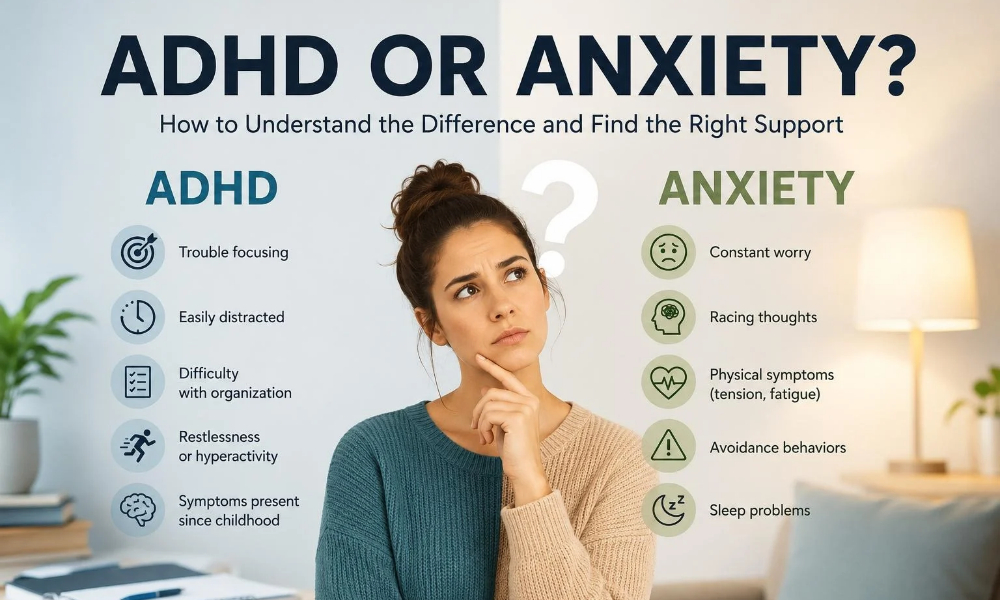
ADHD and anxiety can both cause difficulty concentrating, restlessness, racing thoughts, forgetfulness, sleep problems, and difficulty completing tasks. The key difference is often what drives the symptoms. ADHD is a neurodevelopmental condition involving persistent difficulties with attention regulation, impulsivity, and executive functioning. Anxiety involves excessive fear, worry, nervousness, or anticipation of potential threats. A person with ADHD may lose focus because something else captures their attention, while someone with anxiety may struggle to concentrate because their mind is occupied by worry.
However, the distinction is not always obvious. ADHD and anxiety can occur together, and one condition can sometimes make the other harder to recognize. A comprehensive evaluation considers your symptoms, their timing, childhood history, triggers, physical symptoms, functional impact, and other possible explanations.
Key Takeaways
- ADHD and anxiety share several symptoms, particularly poor concentration, restlessness, sleep difficulties, and racing thoughts.
- ADHD-related distraction is often linked to attention regulation and executive-function difficulties, while anxiety-related concentration problems are frequently driven by worry or fear.
- Anxiety may cause physical symptoms such as muscle tension, sweating, rapid heartbeat, nausea, trembling, or shortness of breath.
- ADHD symptoms generally have roots in childhood, even when an adult is diagnosed much later.
- ADHD and anxiety can occur at the same time.
- A professional evaluation is often needed when symptoms overlap or significantly interfere with daily life.
What Is ADHD?
Attention-deficit/hyperactivity disorder, or ADHD, is a neurodevelopmental condition that can affect attention, impulse control, activity level, and executive functioning. Although many people associate ADHD with children who are visibly hyperactive, adult ADHD can be much less obvious.
An adult with ADHD may struggle to organize tasks, remember appointments, estimate how long activities will take, prioritize responsibilities, or follow through on projects. Some people have predominantly inattentive symptoms, while others experience significant hyperactivity and impulsivity as well.
One important feature is that ADHD symptoms are not simply a reaction to a stressful period. Clinicians generally look for a persistent pattern that began during childhood and occurs across meaningful areas of life.
For example, an adult might say, “I've always been forgetful. School was difficult because I waited until the last minute to study, and now I do the same thing with work deadlines.” That history can provide an important clue during an evaluation.
What Is Anxiety?
Anxiety is the body's natural response to perceived danger, uncertainty, or stress. Everyone experiences anxiety at times. It can help you prepare for an important event, recognize potential risks, or respond quickly when something feels unsafe.
The concern arises when anxiety becomes excessive, persistent, difficult to control, or disruptive to everyday life.
Someone with an anxiety disorder may spend a significant amount of time anticipating negative outcomes. They might repeatedly think about what could go wrong, worry about what other people think, avoid situations that feel threatening, or experience physical symptoms when anxious.
Depending on the type of anxiety, symptoms can include excessive worry, muscle tension, irritability, difficulty sleeping, rapid heartbeat, sweating, trembling, stomach discomfort, dizziness, or a feeling of being constantly “on edge.”
Why Do ADHD and Anxiety Look So Similar?
The brain does not separate every mental health symptom into neat categories. Attention, sleep, emotional regulation, stress responses, and cognitive processing are interconnected.
That means different conditions can produce similar experiences.
For example, imagine you are sitting in a meeting and cannot concentrate. With ADHD, your attention might drift because your mind notices sounds, thoughts, ideas, or other stimuli around you. With anxiety, your concentration might be pulled toward worries about an upcoming deadline, a conversation you had earlier, your health, finances, or what could happen next.
The outward behavior can look identical: you are sitting there, but you are not absorbing what is being said.
The underlying reason is different.
ADHD vs Anxiety: What's Behind the Difficulty Concentrating?
Difficulty concentrating is one of the biggest reasons people confuse ADHD and anxiety.
With ADHD, concentration problems often involve difficulty regulating attention. You may find it difficult to stay engaged with repetitive or low-interest activities. You might start reading an email and suddenly notice another task, check your phone, remember something unrelated, and lose track of what you were doing.
With anxiety, concentration can be disrupted because your mind is occupied by worry. You may technically be trying to listen, read, or work, but part of your attention is continuously analyzing possible problems.
Consider two people preparing a presentation.
The person with ADHD might think, “I need to make these slides,” open the presentation, notice an email, answer it, look something up online, and suddenly realize an hour has passed.
The person experiencing anxiety might open the presentation and immediately start thinking, “What if I make a mistake? What if everyone thinks the presentation is terrible? What if I forget what to say?” The worry itself consumes attention.
These examples are simplified, and real experiences can be much more complicated. But the distinction between distractibility and worry-driven concentration problems can be useful during an evaluation.
Restlessness and Feeling Unable to Slow Down
Both ADHD and anxiety can make a person feel restless.
ADHD-related restlessness may feel like a constant need for stimulation or movement. You may fidget, shift positions, talk frequently, interrupt, or become uncomfortable during long periods of inactivity. Some adults experience more internal restlessness than visible hyperactivity.
Anxiety-related restlessness is often connected to a state of heightened alertness. You may feel tense because your body is preparing for something bad to happen. Even when there is no immediate danger, your nervous system may continue behaving as though something needs to be dealt with.
Ask yourself what the restlessness feels like.
Is it more like, “I need something to do because sitting here is unbearable,” or more like, “I cannot relax because I am worried something is going to go wrong?”
That distinction can provide useful information, although it cannot replace a professional assessment.
Racing Thoughts: ADHD or Anxiety?
Racing thoughts can occur in both ADHD and anxiety, but the content and pattern may be different.
With ADHD, thoughts may jump quickly from one topic to another. You might remember something from years ago, think about a task you need to complete, suddenly have an idea for a project, remember an unanswered message, and then think about something completely unrelated.
Anxiety-related racing thoughts are often more repetitive and threat-focused. You may repeatedly replay a conversation, anticipate possible problems, imagine negative outcomes, or search for certainty about something that cannot be completely controlled.
For example, an anxious thought pattern might sound like:
“What if I made the wrong decision? What if something goes wrong tomorrow? What if I upset them? What if I cannot handle it?”
ADHD-related mental activity may be more scattered:
“I need to answer that email. Oh, I forgot to buy groceries. I should start that project. Wait, I need to call Mom. Where did I put my keys?”
Again, these experiences can overlap. A person with ADHD can worry, and a person with anxiety can become distractible.
Worry vs Distractibility
One of the most useful questions when considering ADHD vs anxiety is: What is pulling your attention away?
If your attention frequently shifts because your brain notices other activities, ideas, sounds, objects, or tasks, ADHD may be worth considering.
If your attention repeatedly returns to fears, uncertainty, potential mistakes, health concerns, relationships, finances, or future events, anxiety may be playing a larger role.
Some people experience both. Anxiety can also develop as a response to years of struggling with untreated ADHD. Repeated missed deadlines, forgotten responsibilities, or difficult relationships may eventually create significant worry about making another mistake.
Physical Symptoms of Anxiety
Physical symptoms can provide another important clue.
Anxiety can activate the body's fight-or-flight response. This may lead to a racing or pounding heart, sweating, trembling, muscle tension, stomach discomfort, dizziness, tingling, chest tightness, or shortness of breath.
Not everyone with anxiety experiences physical symptoms, and physical symptoms are not exclusive to anxiety. Medical conditions can cause many of the same sensations.
For example, chest pain, severe shortness of breath, fainting, or sudden neurological symptoms should not automatically be attributed to anxiety. New, severe, or unexplained physical symptoms may require prompt medical evaluation.
When anxiety is responsible, physical sensations may occur during periods of intense worry or perceived threat, sometimes even when the person consciously knows they are not in immediate danger.
Organization, Procrastination, and Time Management
ADHD is often strongly associated with executive-function difficulties.
You may know exactly what you need to do but struggle to decide where to begin. Large tasks may feel overwhelming. You might repeatedly underestimate how long something will take or wait until a deadline creates enough urgency to get started.
Anxiety can also cause procrastination, but the reason may be different.
Someone with anxiety might avoid a task because they fear making a mistake, being judged, failing, or discovering that they cannot handle it. Perfectionism can become a form of avoidance.
Imagine an important work assignment.
An ADHD-related pattern may involve difficulty initiating the task because it feels boring, complicated, or insufficiently stimulating.
An anxiety-related pattern may involve avoiding the task because beginning it triggers fear about the outcome.
Both can lead to the same result: the deadline gets closer while the task remains unfinished.
How ADHD and Anxiety Can Affect Sleep
Sleep problems are common across many mental health conditions, including ADHD and anxiety.
Adults with ADHD may struggle to transition from activity to rest, become absorbed in stimulating activities late at night, or have difficulty maintaining consistent routines.
Anxiety can make it difficult to sleep because the mind remains focused on worries. You may lie in bed replaying the day's events or thinking about everything that needs to happen tomorrow.
Poor sleep can then make concentration, memory, emotional regulation, and impulse control worse the next day.
This creates an important clinical question: Are sleep problems contributing to your concentration difficulties, or are they occurring because of another underlying condition?
A good evaluation considers both possibilities.
Can You Have ADHD and Anxiety at the Same Time?
Yes. ADHD and anxiety can occur together.
When they coexist, symptoms can become difficult to untangle. Someone may already struggle with organization because of ADHD and then develop anxiety about constantly falling behind. Alternatively, significant anxiety may make an existing attention problem much more noticeable.
Having both conditions does not mean that one diagnosis is “wrong.” Mental health conditions can overlap, and treatment often needs to address the factors that are causing the greatest impairment.
Important Note
If you recognize yourself in both ADHD and anxiety symptoms, try not to decide on a diagnosis by yourself. Some symptoms are shared, and others may have completely different causes. The good news is that you do not have to figure out the distinction alone. A comprehensive evaluation can look at the full pattern and help determine which concerns need attention.
What Else Can Cause Symptoms Similar to ADHD or Anxiety?
ADHD and anxiety are only two possible explanations for problems with concentration, restlessness, forgetfulness, or mental fatigue.
Depression can affect attention, motivation, memory, sleep, and energy. Chronic stress can make it difficult to think clearly. Burnout can leave a person mentally exhausted and unable to maintain their usual level of productivity.
Sleep disorders can also produce significant daytime concentration problems. Certain medications, substance use, hormonal changes, and medical conditions may affect mood, energy, attention, or physical sensations.
Trauma-related conditions can sometimes produce hypervigilance, concentration difficulties, sleep problems, and emotional distress.
This is why a professional should consider the broader clinical picture rather than focusing on one symptom.

How Do Professionals Distinguish ADHD From Anxiety?
There is no single blood test, brain scan, or questionnaire that can independently determine whether an adult has ADHD or anxiety.
A psychiatric evaluation typically begins with a detailed conversation about your current symptoms and how they affect your daily life.
The clinician may ask when your symptoms started, whether they were present during childhood, what situations make them better or worse, and how they affect work, school, relationships, sleep, and other responsibilities.
For ADHD, childhood history is particularly important because ADHD is a neurodevelopmental condition. A clinician may explore school performance, behavior, forgetfulness, organization, attention, impulsivity, and reports from parents or teachers when available.
For anxiety, the clinician may explore the nature of your worries, how frequently they occur, whether you can control them, avoidance behaviors, physical symptoms, panic symptoms, sleep, and the degree to which anxiety interferes with daily life.
Screening tools or standardized questionnaires may be used to support the assessment. However, these tools are not substitutes for clinical judgment.
The provider may also assess for depression, sleep problems, substance use, trauma-related symptoms, and other conditions that could explain or contribute to what you are experiencing.
When Should You Get an Evaluation?
You may benefit from speaking with a mental health professional when concentration problems, worry, restlessness, forgetfulness, or emotional distress persist and begin interfering with your life.
Consider seeking an evaluation if you regularly miss deadlines, struggle to complete responsibilities, avoid important activities because of worry, experience persistent physical anxiety symptoms, or feel that your symptoms are becoming difficult to manage.
You do not need to wait until symptoms become severe. Early evaluation can help clarify what is happening and identify appropriate treatment options.
If physical symptoms such as chest pain, severe difficulty breathing, fainting, or other potentially serious symptoms occur, do not assume they are caused by anxiety. Seek appropriate medical attention, particularly if the symptoms are new, severe, sudden, or unexplained.
How Are ADHD and Anxiety Treated?
Treatment depends on the diagnosis, severity of symptoms, medical history, individual goals, and whether more than one condition is present.
ADHD treatment may include medication management, behavioral strategies, psychotherapy or supportive therapy, and practical approaches for organization, planning, time management, and executive functioning.
Anxiety treatment may involve psychotherapy, medication when clinically appropriate, stress-management strategies, behavioral approaches, and techniques for addressing patterns of worry and avoidance.
When ADHD and anxiety occur together, treatment may need to address both. The order and combination of interventions depend on the individual person's symptoms and clinical needs.
Medication should never be started, stopped, or changed without discussing it with a qualified healthcare professional. Psychiatric medication management involves considering potential benefits, side effects, interactions, medical history, and response over time.
ADHD and Anxiety Care in Sugar Land, TX
If you are searching for help with ADHD, anxiety, or both in Sugar Land, Texas, Blissz Psychiatry provides psychiatric care focused on evaluation, medication management, and supportive mental health treatment.
Learn more about ADHD evaluation and treatment in Sugar Land if concentration problems, impulsivity, disorganization, or other symptoms are affecting your daily life.
You can also explore anxiety treatment in Sugar Land, TX if persistent worry, physical anxiety symptoms, panic, or difficulty relaxing are affecting your well-being.
Because ADHD and anxiety can overlap, a comprehensive psychiatric evaluation may be useful when you are unsure which condition is responsible for your symptoms. Blissz Psychiatry's psychiatric services include psychiatric evaluation, medication management, and supportive therapy.
Not Sure Whether It's ADHD, Anxiety, or Both?
You do not have to keep guessing why your mind feels distracted, restless, or constantly on alert. A professional evaluation can help identify the patterns behind your symptoms and guide you toward appropriate care.
Book an Appointment with Blissz Psychiatry to take the next step.
Frequently Asked Questions
Is it ADHD or anxiety if I cannot concentrate?
It could be either, and some people have both. ADHD-related concentration problems often involve distractibility and difficulty regulating attention, while anxiety can interfere with concentration because your mind is occupied by worry. A professional evaluation can help determine the underlying pattern.
How can I tell the difference between ADHD and anxiety?
Look at the broader pattern rather than one symptom. ADHD typically involves persistent difficulties with attention regulation, organization, impulsivity, and executive functioning, with symptoms beginning during childhood. Anxiety is more strongly associated with excessive worry, fear, anticipation of negative outcomes, physical tension, and heightened alertness.
Can anxiety cause ADHD-like symptoms?
Yes. Anxiety can cause poor concentration, restlessness, forgetfulness, sleep problems, and difficulty completing tasks. These symptoms can resemble ADHD, which is why an evaluation should consider anxiety and other possible explanations before reaching a diagnosis.
Can ADHD cause anxiety?
ADHD itself does not necessarily cause an anxiety disorder, but living with persistent ADHD-related difficulties can contribute to stress and worry. Repeated missed deadlines, disorganization, academic challenges, or relationship problems may increase anxiety in some people.
Can you have ADHD and anxiety together?
Yes. ADHD and anxiety can coexist. When they occur together, symptoms may overlap and make diagnosis more complicated. A comprehensive evaluation can help identify both conditions and determine what treatment approach may be appropriate.
Does ADHD cause racing thoughts?
Some adults with ADHD experience rapidly shifting thoughts, particularly when they are interested in multiple ideas or stimuli. Anxiety can also cause racing thoughts, but anxious thinking is often more focused on worry, uncertainty, or possible negative outcomes.
Can ADHD cause physical anxiety symptoms?
ADHD can be associated with restlessness and stress, but physical symptoms such as rapid heartbeat, sweating, trembling, nausea, chest tightness, and shortness of breath are commonly associated with anxiety and many other conditions. New or severe physical symptoms should not automatically be attributed to ADHD or anxiety.
What should I do if I think I have ADHD and anxiety?
Consider scheduling a comprehensive mental health evaluation. Write down the symptoms you experience, when they occur, how they affect your life, and whether similar difficulties were present during childhood. This information can help your provider understand the bigger picture.
The Bottom Line
ADHD vs anxiety is not always an easy comparison because the two conditions share several symptoms. Trouble concentrating, restlessness, racing thoughts, sleep problems, procrastination, and emotional distress can occur with either condition.
The more useful question is what is driving those symptoms.
ADHD often involves a long-standing pattern of attention regulation, impulsivity, and executive-function difficulties. Anxiety is more closely associated with excessive worry, fear, uncertainty, and a heightened threat response. But because the conditions can coexist, there is no reliable way to diagnose yourself simply by comparing symptoms online.
If you have been struggling to focus, constantly worrying, feeling restless, or wondering why everyday responsibilities have become so difficult, professional evaluation can provide clarity. Understanding the cause of your symptoms is the first step toward choosing care that actually fits your needs.
Medical Disclaimer: This article is intended for general educational purposes and does not diagnose or treat ADHD, anxiety, or any other mental health condition. If you are concerned about your symptoms, speak with a qualified healthcare professional for an individualized evaluation.
0 Comments