
If you have bipolar disorder, finding the right medication can feel like trying to regain balance after your mood, sleep, energy, and thoughts have been pulled in different directions. A bipolar disorder mood stabilizer may be an important part of treatment because these medications can help reduce the severity or frequency of mood episodes and support longer-term stability. But there is no single medication that works perfectly for everyone. The right choice depends on whether you experience mania, hypomania, depression, mixed symptoms, medication side effects, other health conditions, and how you have responded to treatment in the past.
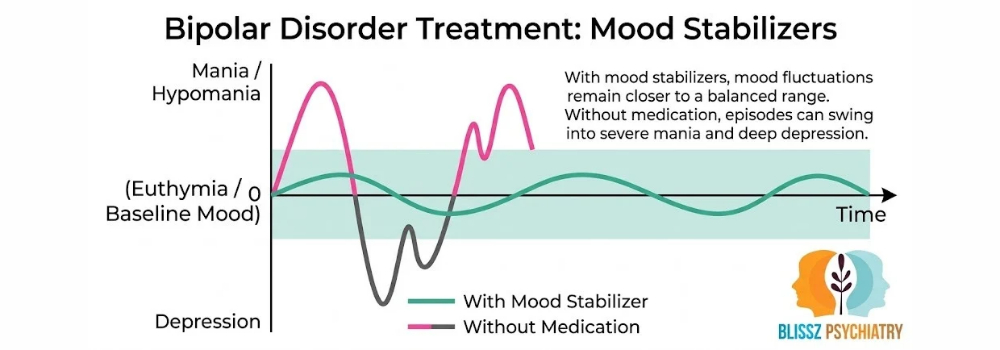
Table of Contents
- What Is a Mood Stabilizer for Bipolar Disorder?
- How Do Mood Stabilizers Work?
- What Are the Main Mood Stabilizers Used for Bipolar Disorder?
- Is Lithium a Good Mood Stabilizer for Bipolar Disorder?
- How Is Lamotrigine Used in Bipolar Disorder?
- When Are Valproate and Other Medications Used?
- How Does a Psychiatric Provider Choose a Mood Stabilizer?
- What Are the Side Effects of Mood Stabilizers?
- Why Does Bipolar Medication Require Ongoing Monitoring?
- Is Medication Enough to Manage Bipolar Disorder?
- When Should You Seek Urgent Help?
- What Should You Expect From Bipolar Disorder Treatment?
- Bipolar Disorder Treatment in the Houston Area
- Frequently Asked Questions
Important Note
Bipolar disorder is more than ordinary moodiness, and living with unpredictable changes in mood can be exhausting. If you have been struggling with periods of unusually high energy, very little sleep, racing thoughts, impulsive behavior, depression, or major changes in functioning, understanding your treatment options can make the situation feel less overwhelming. This article explains what mood stabilizers do, why different medications may be chosen, what side effects to discuss with a provider, and why ongoing psychiatric care matters. Learning about treatment does not mean you need to diagnose yourself. It gives you better information to take into a conversation with a qualified mental health professional.
What Is a Mood Stabilizer for Bipolar Disorder?
A mood stabilizer is a medication used to help control significant changes in mood, particularly the manic, hypomanic, depressive, or mixed episodes associated with bipolar disorder. These medications can be used during certain acute mood episodes and as part of longer-term maintenance treatment intended to reduce the risk or severity of future episodes.
It is important to understand what the term “mood stabilizer” actually means. It does not mean that the medication will make you feel emotionally flat or remove normal emotions. The goal is generally to reduce clinically significant mood instability while helping you maintain your ability to function in everyday life.
Bipolar disorders involve episodes that can affect mood, energy, sleep, judgment, activity, concentration, and behavior. The American Psychiatric Association explains that mood episodes can involve mania or hypomania on one side and depression on the other, with symptoms lasting days to weeks rather than simply changing from hour to hour.
Because bipolar disorder can look different from one person to another, treatment also needs to be individualized. One person may struggle primarily with severe manic episodes, while another may experience recurrent depression, hypomania, anxiety, sleep disruption, or mixed symptoms. A medication that works well for one person may not be the best choice for another.
That is why a psychiatric evaluation is usually the starting point rather than simply asking, “What is the strongest mood stabilizer?” The better question is, “Which treatment is safest and most appropriate for my pattern of symptoms and medical history?”
How Do Mood Stabilizers Work?
Mood stabilizers work through different biological mechanisms, and scientists do not have a complete explanation for every way these medications affect the brain. What is clear is that different medications can influence brain signaling and help reduce symptoms associated with bipolar mood episodes.
Lithium, for example, affects cellular processes and brain signaling involved in mood regulation. Anticonvulsant medications used in bipolar treatment, such as valproate and lamotrigine, work through different mechanisms. Some atypical antipsychotic medications are also used in bipolar disorder and can target manic or depressive symptoms depending on the specific medication.
The practical goal is not simply to change one neurotransmitter or eliminate every mood fluctuation. Treatment aims to reduce clinically significant episodes and help a person maintain greater stability over time.
This distinction matters because people sometimes expect medication to work like a switch: take a pill, and the mood changes immediately. In reality, treatment can require careful dose adjustments, monitoring, and sometimes trying more than one medication before finding an effective and tolerable approach. NIMH notes that some people need to try several medications before finding the treatment that works best for them.
Medication response is also influenced by sleep, stress, substance use, other psychiatric conditions, physical health, and whether medication is taken consistently. These factors are important parts of the treatment conversation rather than signs that someone has “failed” treatment.
In simple terms: a mood stabilizer is intended to help reduce problematic mood episodes, but choosing and adjusting one is a medical process rather than a one-size-fits-all decision.
What Are the Main Mood Stabilizers Used for Bipolar Disorder?
Several medications may be used as part of bipolar disorder treatment. The term “mood stabilizer” is commonly associated with medications such as lithium and certain anticonvulsants, while some atypical antipsychotics also play an important role in treating and preventing bipolar mood episodes.
Commonly discussed medications include lithium, lamotrigine, and valproate or divalproex. Depending on the clinical situation, a provider may also prescribe an atypical antipsychotic. The medication chosen depends on the type and severity of symptoms, the phase of bipolar disorder being treated, previous treatment response, other medications, physical health, and potential risks.
The American Psychiatric Association identifies lithium and anticonvulsant medications such as lamotrigine and valproate among medications used in bipolar disorder treatment. Atypical antipsychotics may also be used for bipolar symptoms.
This is one reason online lists of the “best mood stabilizer” can be misleading. A medication that is appropriate for preventing manic episodes may not be the preferred option for someone whose primary concern is bipolar depression. Likewise, a person with certain medical conditions may need a different approach because of potential interactions or monitoring requirements.
For someone who has already taken medication, the treatment history can be particularly useful. Knowing which medications helped, which caused side effects, how long they were taken, and whether symptoms returned after stopping can give a psychiatric provider valuable information.

Is Lithium a Good Mood Stabilizer for Bipolar Disorder?
Lithium is one of the best-known medications used to treat bipolar disorder and has a long history in psychiatric care. It can be used for acute mania and for longer-term prevention of mood episodes in appropriate patients. Research and clinical guidance also recognize lithium's potential role in reducing suicide risk among people with bipolar disorder.
However, lithium is not automatically the right choice for everyone. It requires careful prescribing and monitoring because the amount of lithium in the body needs to remain within an appropriate range. Blood testing may be used to check lithium levels, and providers may also monitor kidney and thyroid function.
The American Psychiatric Association notes that lithium is commonly used for both acute and preventive treatment of bipolar disorder and that blood levels are monitored to make sure the medication remains effective without reaching a concerning level. NIMH also notes the importance of monitoring lithium levels and kidney and thyroid function.
Possible side effects can include increased urination, tremor, stomach symptoms, weight changes, and thyroid-related effects. These do not mean that everyone taking lithium will experience them, but they are important reasons to stay in communication with the prescribing provider.
Another important point is that lithium should not be started, stopped, or adjusted without medical guidance. Changes in hydration, certain medications, and other health circumstances can affect lithium levels. If you are prescribed lithium, your provider can explain what symptoms should prompt a call and what monitoring schedule is appropriate.
How Is Lamotrigine Used in Bipolar Disorder?
Lamotrigine is an anticonvulsant medication that is also used in bipolar disorder. It can be particularly relevant when depressive symptoms are an important part of a person's bipolar pattern.
Lamotrigine is different from lithium in several important ways. It is not simply another version of the same medication, and it should not be viewed as interchangeable with every other mood stabilizer. Providers consider the person's history, current symptoms, treatment goals, other medications, and potential risks before prescribing it.
One distinctive feature of lamotrigine treatment is the need for careful dose escalation. The dose is generally increased gradually rather than raised quickly. This is partly related to the risk of serious skin reactions associated with the medication. Any new or unusual rash while taking lamotrigine should be reported promptly to the prescribing provider, particularly if it is accompanied by other concerning symptoms.
The broader lesson is that medication instructions are not arbitrary. When a provider recommends a gradual increase, regular monitoring, or a specific schedule, those instructions are part of the medication's safety plan.
When Are Valproate and Other Medications Used?
Valproate, including formulations such as divalproex, may be used to treat certain bipolar symptoms, particularly manic or mixed episodes. It is one of the medications that can function as a mood stabilizer in bipolar disorder.
Like other psychiatric medications, it has potential benefits and risks that need to be evaluated individually. Medical history, other medications, liver health, reproductive considerations, and other factors can affect whether it is appropriate.
Other medications may also be incorporated into bipolar treatment. Atypical antipsychotics can be used for manic symptoms and, depending on the medication, bipolar depression or maintenance treatment. In some circumstances, antidepressants may be considered for bipolar depression, but they require careful psychiatric oversight and are generally not used alone in bipolar disorder because of the possibility of triggering mania or rapid cycling.
NIMH specifically notes that antidepressants are not used alone for bipolar depression because they can increase the risk of a manic episode or rapid cycling in some people.
This is why self-treating bipolar symptoms with medication prescribed for ordinary depression or anxiety can be risky. Bipolar disorder requires a treatment strategy that accounts for the full pattern of mood episodes rather than focusing on one symptom at a time.
Important Note
If you are worried because your symptoms seem complicated, try not to assume that the most frightening possibility is automatically the correct one. Sleep problems, anxiety, depression, medication effects, substance use, trauma, and other conditions can overlap with bipolar symptoms. Some causes may be manageable with straightforward treatment, while others need more detailed psychiatric evaluation. Avoid changing or stopping psychiatric medication on your own, especially if you have been feeling better. A sudden medication change can sometimes cause symptoms to return or worsen.
How Does a Psychiatric Provider Choose a Mood Stabilizer?
Choosing a bipolar disorder mood stabilizer involves much more than matching a diagnosis to a medication name. A provider needs to understand what your mood episodes actually look like and how they have changed over time.
A psychiatric evaluation may explore periods of unusually high energy, reduced need for sleep, racing thoughts, rapid speech, impulsive behavior, unusual confidence, increased activity, irritability, or risky decisions. It may also examine periods of depression involving persistent sadness, loss of interest, fatigue, appetite or sleep changes, concentration difficulties, hopelessness, or difficulty completing everyday responsibilities.
Blissz Psychiatry's bipolar treatment approach includes reviewing current symptoms, previous mood episodes, sleep patterns, energy levels, psychiatric and medical history, current and previous medications, family mental health history, substance use, work and relationships, and treatment goals.
The provider may also consider whether symptoms fit bipolar I disorder, bipolar II disorder, cyclothymic disorder, or another condition. This distinction matters because treatment decisions depend on the actual clinical picture.
Other factors can influence medication selection. These may include pregnancy or plans for pregnancy, kidney or liver function, thyroid concerns, other prescribed medications, allergies, substance use, previous side effects, age, sleep patterns, and the person's ability to attend follow-up appointments and complete required monitoring.
The best treatment plan is therefore not necessarily the one with the longest medication list. In many cases, the goal is to find an effective regimen that provides meaningful symptom control while minimizing unnecessary side effects and complexity.
What Are the Side Effects of Mood Stabilizers?
Every medication has potential side effects, but the specific effects depend on the medication, dose, other medications, and the individual taking it.
Some people may notice changes in appetite, weight, sleep, energy, concentration, digestion, or coordination. Others may experience tremor, increased urination, sedation, or other physical effects. Some side effects may become less noticeable as the body adjusts, while others may require a dose change or a different medication.
The important question is not whether a medication has side effects. Almost every effective medication has potential adverse effects. The more useful question is whether the expected benefit outweighs the risks for that particular person and whether the treatment can be monitored safely.
For example, lithium requires attention to blood levels and kidney and thyroid function. Other mood stabilizers can have their own laboratory monitoring, interaction, or safety considerations.
Do not stop a prescribed mood stabilizer simply because you feel better or because you dislike a side effect. NIMH advises people not to stop prescribed psychiatric medication without discussing it with their healthcare provider first.
Instead, tell your provider what has changed. Sometimes a small adjustment can improve tolerability. In other situations, a different medication may make more sense.
Why Does Bipolar Medication Require Ongoing Monitoring?
Medication management does not end when a prescription is written. Bipolar disorder is generally managed over time, and the treatment plan may need to change as symptoms, health conditions, life circumstances, and medication response change.
Follow-up appointments allow a psychiatric provider to determine whether symptoms are improving, whether mood episodes are becoming less frequent, whether sleep is becoming more stable, and whether medication side effects are affecting daily life.
Monitoring can also be important for safety. Certain medications require blood tests or other health checks. Lithium, for example, may require monitoring of blood levels as well as kidney and thyroid function.
There is also a practical reason for follow-up: your understanding of your own symptoms can change as treatment progresses. Once severe symptoms settle, you may recognize patterns that were difficult to see during an acute episode. Keeping a record of sleep, mood changes, energy, medication timing, and unusual behavior can help you and your provider identify patterns.
If someone notices several nights of dramatically reduced sleep, unusually high energy, racing thoughts, increased impulsivity, or a sudden shift in behavior, those changes are worth discussing rather than waiting for a full episode to develop.
Is Medication Enough to Manage Bipolar Disorder?
Medication can be a central component of bipolar disorder treatment, but it does not necessarily have to be the only component.
Psychotherapy can provide education, coping strategies, emotional support, and practical tools for managing stress and recognizing changes in mood. Therapy may also help patients and families understand the condition and improve treatment adherence.
The American Psychiatric Association describes medication as a cornerstone of bipolar disorder treatment while noting that psychotherapy can help people understand their illness, adhere to treatment, and prevent future episodes.
Daily routines also matter. Consistent sleep, regular meals, physical activity appropriate for the individual, limiting substances that can destabilize mood, and maintaining supportive relationships can all become important parts of a broader treatment plan.
This does not mean lifestyle changes can replace medication when medication is clinically necessary. Bipolar disorder is a medical condition, and some people require long-term medication to maintain stability. Instead, healthy routines can complement psychiatric treatment.
At Blissz Psychiatry, supportive therapy and medication management are presented as complementary parts of individualized bipolar care. The practice describes medication management as monitoring response, managing side effects, and making dosage changes when clinically appropriate.
When Should You Seek Urgent Help?
Bipolar disorder can sometimes become an emergency, particularly when there is a serious risk of self-harm, suicide, dangerous behavior, severe confusion, psychosis, or an inability to care for basic needs.
Seek immediate emergency assistance if you or someone you know is in immediate danger, has made a suicide attempt, has a specific plan to die, is experiencing severe psychosis, or cannot remain safe. In the United States, you can call or text 988 for the Suicide & Crisis Lifeline. If there is an immediate physical safety emergency, call 911 or go to the nearest emergency department.
It is also important not to wait for a crisis if symptoms are clearly escalating. A dramatic reduction in sleep, rapidly increasing energy, severe agitation, escalating impulsive behavior, racing thoughts, hallucinations, paranoia, or a major decline in functioning can warrant prompt psychiatric evaluation.
Friends and family can sometimes notice these changes before the person experiencing them recognizes what is happening. If someone you care about is behaving very differently from their usual pattern and appears unsafe, take the change seriously.
What Should You Expect From Bipolar Disorder Treatment?
Starting treatment does not necessarily mean you will receive a prescription at the first minute of your first appointment. A careful evaluation may come first.
Your provider may ask about your current symptoms, previous mood episodes, sleep, energy, behavior, medical history, family history, previous psychiatric diagnoses, medications, substance use, and treatment goals. This information helps distinguish bipolar disorder from other conditions that can produce overlapping symptoms.
Once the clinical picture is clearer, your provider can discuss medication options and explain why a particular treatment may be appropriate. If a mood stabilizer is prescribed, follow-up can help determine whether the medication is controlling symptoms and whether side effects are manageable.
It is normal to have questions. You can ask how long a medication may take to work, which symptoms it is intended to target, what side effects should be reported, whether laboratory testing is needed, what happens if you miss a dose, and how long treatment may continue.
Blissz Psychiatry also recommends bringing a current medication list, previous psychiatric records when available, previous diagnoses, and questions to a bipolar disorder appointment.
Being an active participant in treatment can make appointments more productive. If you have noticed changes in sleep, appetite, energy, mood, concentration, or behavior, write them down before your visit. Even details that seem minor can help a provider understand the pattern.
Bipolar Disorder Treatment in the Houston Area
If you are looking for bipolar disorder treatment in the Houston area, Blissz Psychiatry provides psychiatric care from its Sugar Land, Texas location. The practice lists its Texas office at 77 Sugar Creek Center Blvd, Suite 600, Sugar Land, TX 77478, and states that it serves patients throughout the greater Houston area.
Blissz Psychiatry offers psychiatric evaluation, medication management, and supportive therapy as part of its approach to bipolar disorder care. The treatment process is designed around the individual's symptoms, history, treatment response, and goals rather than relying on a single medication for every patient.
If you are still unsure whether your symptoms could be related to bipolar disorder, starting with a psychiatric evaluation may be more useful than trying to identify a medication yourself. You can also learn more about psychiatric evaluation in Houston and how a provider assesses mood symptoms, medical history, medications, sleep, and daily functioning.
For people who have already been diagnosed and need help reviewing or adjusting psychiatric medications, psychiatric medication management in Houston may be a relevant next step.
If you are specifically looking for care closer to the Texas office, Blissz Psychiatry also provides information about psychiatric medication management in Sugar Land and bipolar disorder treatment in Sugar Land.
People experiencing depressive symptoms alongside bipolar disorder may also benefit from learning about depression treatment in Houston, particularly when depression is part of a broader pattern of mood episodes. If anxiety symptoms occur alongside mood changes, anxiety treatment in Houston may also be discussed as part of a comprehensive psychiatric evaluation.
Take the Next Step Toward More Stable Mood Management
If bipolar symptoms are interfering with your sleep, relationships, work, or daily life, you do not have to figure out medication options alone. A psychiatric evaluation can help clarify your symptoms and determine whether medication management, supportive therapy, or a combination of approaches may be appropriate.
Blissz Psychiatry | 832-400-1002
Frequently Asked Questions
What is the best mood stabilizer for bipolar disorder?
There is no single best mood stabilizer for every person with bipolar disorder. Lithium, lamotrigine, valproate, and other medications may be appropriate depending on the person's symptoms, bipolar disorder type, medical history, previous treatment response, side-effect risks, and treatment goals. A psychiatric provider can help determine which option is most appropriate.
What does a mood stabilizer do for bipolar disorder?
A mood stabilizer helps reduce or prevent significant mood episodes associated with bipolar disorder. Depending on the medication, it may be used to treat or prevent manic, hypomanic, depressive, or mixed episodes. Long-term treatment may help reduce the likelihood or severity of future episodes.
Is lithium still used for bipolar disorder?
Yes. Lithium remains an important medication for bipolar disorder and may be used for acute mania and long-term prevention of mood episodes. It requires appropriate medical monitoring, including lithium blood levels and, when indicated, kidney and thyroid assessments.
Can a mood stabilizer treat bipolar depression?
Some mood stabilizers can be part of treatment for bipolar depression, although the specific medication depends on the individual clinical situation. Certain atypical antipsychotics may also be used. Treatment needs to account for both depressive and manic or hypomanic symptoms rather than treating depression in isolation.
Can you take an antidepressant with a mood stabilizer?
In some cases, an antidepressant may be added to a bipolar treatment plan, but this decision should be made by a psychiatric provider. Antidepressants are generally not used alone for bipolar disorder because they may increase the risk of switching into mania or rapid cycling in some people.
How long do you have to take a mood stabilizer?
The duration varies. Because bipolar disorder can involve recurrent mood episodes, some people need long-term maintenance treatment. The decision depends on the person's history, recurrence risk, response to treatment, side effects, and overall health. Never stop a prescribed mood stabilizer without discussing the change with the prescribing provider.
What happens if a bipolar medication causes side effects?
Tell your psychiatric provider rather than stopping the medication on your own. The provider may adjust the dose, change the timing, monitor the symptom more closely, address an interaction, or consider another medication. Serious or unusual symptoms should be reported promptly.
Do mood stabilizers make you feel numb?
They are not intended to eliminate normal emotions. The goal is to reduce clinically significant mood episodes and help improve stability. If you feel emotionally numb, excessively sedated, unusually slowed down, or unlike yourself after starting medication, discuss it with your provider.
Can bipolar disorder be treated without medication?
Psychotherapy, education, sleep routines, stress management, and other supportive strategies can be valuable parts of bipolar care. However, many people with bipolar disorder benefit from medication, particularly when mood episodes are severe or recurrent. Treatment should be individualized rather than based on a decision to avoid or accept medication in every situation.
When should I see a psychiatrist for bipolar symptoms?
Consider a psychiatric evaluation if significant changes in mood, sleep, energy, thinking, behavior, or functioning are recurring or interfering with your life. Seek immediate help if there is a risk of suicide, self-harm, severe psychosis, dangerous behavior, or inability to remain safe.
Can bipolar disorder treatment be provided online?
Some eligible patients may receive psychiatric services through telehealth, depending on location, clinical needs, and applicable requirements. Blissz Psychiatry states that some eligible Texas patients may receive psychiatric services through telehealth and recommends asking whether online care is appropriate.
Understanding Your Treatment Is Part of Taking Control
Living with bipolar disorder can sometimes make people feel as though their own mood is controlling their life. A sudden change in energy can disrupt sleep. A period of depression can make ordinary responsibilities feel impossible. A manic or hypomanic episode can lead to decisions that seem completely different from the choices you would normally make.
The purpose of treatment is not to erase your personality or prevent you from experiencing normal happiness, excitement, sadness, or frustration. The goal is to reduce the extreme mood episodes that interfere with health, relationships, work, safety, and quality of life.
A bipolar disorder mood stabilizer may be an important part of that process, but medication is only one piece of thoughtful psychiatric care. The right treatment depends on your individual pattern of symptoms, health history, previous medications, side effects, and goals.
If you have questions about lithium, lamotrigine, valproate, another mood stabilizer, or a medication you are already taking, bring those questions to a qualified psychiatric provider. You deserve an explanation that considers your specific situation rather than a generic medication list found online.
With appropriate evaluation, ongoing monitoring, and a treatment plan that fits the individual, bipolar disorder can be managed. The process may take patience, but finding greater stability is a realistic treatment goal for many people.
Medical Disclaimer
This article is for general educational purposes only and is not a substitute for diagnosis, individualized medical advice, or emergency care. Medication decisions should be made with a qualified healthcare professional who understands your medical and psychiatric history. Do not start, stop, or change psychiatric medication without professional guidance. If you or someone else is in immediate danger or experiencing a mental health emergency, call 911 or 988 in the United States or seek emergency medical care.
0 Comments