
For many women, ADHD does not look the way they expected it to.
There may be no obvious hyperactivity, disruptive behavior, or constant inability to sit still. Instead, ADHD may look like forgetting appointments, losing track of conversations, procrastinating until the last possible moment, feeling overwhelmed by ordinary responsibilities, or spending enormous amounts of energy trying to appear organized.
A woman may become known as the person who always has everything together while privately feeling as though she is barely keeping up.
She may be successful at work, dependable for her family, and highly capable in many areas of life, yet struggle with planning, time management, emotional regulation, household organization, or remembering everyday details. Sometimes these difficulties have been present for years but are only recognized as ADHD after adulthood.
This is one reason ADHD in women can be missed or diagnosed later in life. Symptoms can be subtle, masked by coping strategies, or mistaken for anxiety, depression, stress, personality traits, or simply being overwhelmed.
Table of Contents
- Quick Answer: What Does ADHD Look Like in Women?
- Key Takeaways
- Why Is ADHD Often Missed in Women?
- What Are the Common Symptoms of ADHD in Women?
- What Does Inattentive ADHD Look Like in Women?
- Can Women With ADHD Be Hyperactive?
- How Does ADHD Affect Executive Function?
- What Is ADHD Masking?
- Can Perfectionism Be Related to ADHD?
- Can ADHD Cause Emotional Overwhelm?
- How Can ADHD Affect Work and Career?
- How Can ADHD Affect Relationships?
- Can Hormonal Changes Affect ADHD Symptoms?
- ADHD, Anxiety and Depression: How Are They Connected?
- How Is ADHD Diagnosed in Women?
- What Treatment Options Are Available?
- When Should a Woman Seek an ADHD Evaluation?
- ADHD Evaluation and Treatment in Sugar Land, TX
- Frequently Asked Questions
- The Bottom Line
Important Note
If you have spent years wondering why certain everyday tasks seem much harder for you than they appear to be for other people, there may be an explanation. ADHD is not a measure of intelligence, motivation, or character. Understanding how ADHD can present in women may help you recognize patterns that were previously dismissed as forgetfulness, laziness, anxiety, perfectionism, or simply “having too much on your plate.”
Quick Answer: What Does ADHD Look Like in Women?
ADHD in women may involve difficulty sustaining attention, forgetfulness, disorganization, procrastination, poor time management, emotional overwhelm, difficulty starting tasks, losing things, and problems managing multiple responsibilities. Many women experience predominantly inattentive symptoms rather than obvious hyperactivity. Some also develop coping strategies such as perfectionism, excessive planning, over-preparation, or masking that make their ADHD less visible to other people.
ADHD symptoms generally begin during childhood or adolescence, although they may not be recognized until adulthood. A professional evaluation considers current symptoms, developmental history, functioning across different settings, and whether another condition could better explain the difficulties.
Key Takeaways
- ADHD can present differently in women than the stereotypical image of childhood hyperactivity suggests.
- Inattentive symptoms may be especially easy to overlook.
- Women may compensate for ADHD through perfectionism, over-preparation, people-pleasing, or other masking strategies.
- ADHD can affect work, relationships, household responsibilities, finances, time management, and emotional regulation.
- Anxiety and depression can occur alongside ADHD or sometimes resemble ADHD symptoms.
- Hormonal changes may affect how some women experience existing ADHD symptoms, although individual experiences vary.
- A comprehensive evaluation is more useful than relying on a symptom checklist or online quiz.
Why Is ADHD Often Missed in Women?
One major reason is that ADHD has historically been associated with a highly visible pattern: a child who cannot sit still, frequently interrupts others, struggles to follow classroom rules, and is constantly getting into trouble.
That presentation certainly exists, but it is not the only way ADHD can appear.
Some girls and women experience more inattentive symptoms. They may daydream, forget instructions, lose school supplies, struggle to finish assignments, or become overwhelmed by tasks that require sustained mental effort. If they are quiet, polite, intelligent, or academically capable, their difficulties may not attract much attention.
A girl may learn that she can compensate by working twice as long as everyone else. She may stay up late finishing assignments, meticulously organize her belongings, copy other people's routines, or rely on intense last-minute pressure to complete tasks.
From the outside, it may look like she is doing fine.
Internally, the experience can be very different.
By adulthood, those coping strategies may become exhausting. A woman may be balancing employment, relationships, children, household responsibilities, finances, appointments, and social expectations. The systems that helped her compensate when life was simpler may no longer be enough.
That is sometimes when previously unrecognized ADHD becomes much harder to ignore.
What Are the Common Symptoms of ADHD in Women?
ADHD symptoms can vary considerably from one person to another. Not every woman with ADHD experiences the same difficulties, and symptoms can change as responsibilities and environments change.
Common experiences may include difficulty maintaining attention during conversations or repetitive tasks, frequently misplacing items, forgetting appointments, struggling with deadlines, procrastinating, having difficulty estimating how long something will take, and starting multiple projects without completing them.
Some women describe their minds as constantly busy even when their bodies are relatively still.
Others say they can focus extremely well on something interesting but cannot make themselves begin a task that feels boring or overwhelming.
This difference can be confusing. A woman might think, “If I can spend four hours researching something I love, how can I possibly have ADHD?”
ADHD does not necessarily mean that you cannot focus on anything. Difficulties with regulating attention can be more accurate than simply saying someone has a lack of attention.
What Does Inattentive ADHD Look Like in Women?
Inattentive ADHD can be particularly difficult to recognize because the symptoms may not attract attention from teachers, parents, coworkers, or partners.
A woman may listen to a meeting and genuinely intend to remember everything, only to realize later that she cannot recall several important details.
She may open an email, become distracted by another notification, and completely forget to respond. She may make lists constantly but still struggle to follow them.
She may repeatedly underestimate how long ordinary tasks will take.
There can also be a frustrating gap between knowing what needs to be done and being able to consistently make yourself do it.
For example, you may know that a bill needs to be paid, an appointment needs to be scheduled, or a project needs to be submitted. You may genuinely care about the outcome. Yet the task sits unfinished until the deadline becomes urgent.
This is not necessarily a lack of responsibility.
Executive-function difficulties can make task initiation, sequencing, prioritization, and follow-through unusually difficult.
Can Women With ADHD Be Hyperactive?
Yes. Hyperactivity does not always mean physically running around or being unable to sit still.
In adults, hyperactivity may be experienced as internal restlessness, difficulty relaxing, excessive talking, frequent movement, interrupting, constantly needing stimulation, or feeling uncomfortable when there is nothing to do.
Some women describe their minds as constantly “on.” They may jump rapidly between thoughts, hobbies, conversations, and projects.
Others channel their restlessness into productivity and may appear extremely busy or constantly occupied.
Because adult hyperactivity can be subtle, it may not be recognized as an ADHD symptom unless the broader pattern is considered.
How Does ADHD Affect Executive Function?
Executive functions are the mental processes involved in organizing behavior toward a goal.
For someone with ADHD, difficulties with executive functioning may be more disruptive than simply being distracted.
You may struggle to decide where to begin a large project. You may have difficulty breaking a complicated task into manageable steps. You may forget what you were doing after an interruption or become overwhelmed when several demands arrive at once.
Time management can also become a major challenge.
You may think a task will take 15 minutes when it takes an hour. You may become intensely focused on one activity and suddenly realize that several hours have passed.
These experiences can create a cycle of procrastination and urgency. A deadline approaches, anxiety increases, and suddenly you are able to work intensely because the task has become immediately important.
That last-minute productivity can sometimes hide ADHD from others while leaving the person exhausted.

What Is ADHD Masking?
ADHD masking refers broadly to efforts to hide or compensate for symptoms so that other people do not notice the difficulties.
Masking can take many forms.
A woman may arrive extremely early because she is afraid of being late. She may create elaborate reminder systems because she knows she forgets things. She may rehearse conversations before meetings. She may over-prepare for simple tasks because she worries about making mistakes.
She may also imitate organizational habits she sees in other people without actually finding those systems easy to maintain.
From the outside, these behaviors can look like exceptional organization.
Internally, they may feel like constant effort.
Masking is one reason a woman can appear highly capable while experiencing significant ADHD-related impairment. Success in school or a career does not automatically rule out ADHD.
The important question is not simply, “Are you successful?”
It is also, “How much effort does it take you to maintain that success, and what happens when your usual coping strategies stop working?”
Can Perfectionism Be Related to ADHD?
Perfectionism is not an ADHD diagnostic criterion, but perfectionistic behaviors can sometimes develop as a response to repeated difficulties with organization, memory, time management, or mistakes.
If you have spent years forgetting deadlines or misplacing important items, you may respond by becoming extremely careful.
You might check an email five times before sending it. You may spend excessive time preparing for a presentation because you are afraid you will forget something. You may avoid beginning a project because you cannot figure out how to do it perfectly.
This can create an exhausting paradox: the desire to do everything perfectly makes it harder to get things done.
Perfectionism can also overlap with anxiety. That is why a professional evaluation should consider the entire picture rather than assuming that every organizational difficulty is caused by ADHD.
Can ADHD Cause Emotional Overwhelm?
Emotional regulation is an area many adults with ADHD report struggling with, although emotional dysregulation itself is not one of the core diagnostic criteria.
You may feel emotions intensely and have difficulty shifting away from them once they appear.
A minor criticism might stay on your mind for hours. A stressful day might leave you completely drained. Several small responsibilities may accumulate until you suddenly feel unable to deal with any of them.
Some women also describe becoming overwhelmed by sensory stimulation, competing demands, noise, interruptions, or too many decisions at once.
These experiences can be especially difficult when combined with work, parenting, relationship responsibilities, and household management.
It is important, however, not to automatically attribute every emotional symptom to ADHD. Anxiety, depression, trauma-related conditions, hormonal changes, sleep problems, and other factors can also influence emotional regulation.
How Can ADHD Affect Work and Career?
A woman with ADHD may be extremely intelligent, creative, and capable while still struggling with the organizational demands of a job.
She might produce excellent work but frequently miss administrative details. She may perform exceptionally well under pressure but struggle with long-term projects. She may have great ideas but difficulty turning them into structured plans.
Meetings can be challenging when they involve lengthy discussions without immediate stimulation. Emails and routine paperwork may accumulate because they feel less urgent than more interesting tasks.
Some women compensate by working late, arriving early, checking everything repeatedly, or taking work home.
Over time, this can contribute to exhaustion and self-doubt.
A woman may think, “Everyone else seems to manage this. Why is it so difficult for me?”
That question can be an important reason to seek an evaluation, particularly when these patterns have existed for years.
How Can ADHD Affect Relationships?
ADHD can affect relationships in ways that are easy to misunderstand.
Forgetting plans may be interpreted as not caring. Interrupting may be perceived as disrespect. Distractibility during conversations may look like disinterest. Difficulty completing household tasks may create conflict when responsibilities are unevenly managed.
The person with ADHD may also feel misunderstood.
She may genuinely care deeply about her partner or family but struggle to consistently demonstrate that care through organization, memory, or follow-through.
Communication can become especially important when ADHD symptoms affect shared responsibilities.
Instead of framing the issue as “You don't care enough,” it may be more productive to ask whether an executive-function difficulty is contributing and whether practical systems or professional support could help.
Can Hormonal Changes Affect ADHD Symptoms?
Many women notice changes in attention, mood, sleep, or energy around hormonal transitions. Some women with ADHD report that their symptoms become more noticeable during certain phases of their menstrual cycle or during major hormonal transitions.
However, hormonal influences are complex and individual. Not every concentration problem related to a hormonal change means ADHD is present.
Changes associated with menstruation, pregnancy, postpartum periods, perimenopause, and menopause can also affect sleep, mood, energy, and cognition.
If you notice that attention or emotional symptoms change significantly around hormonal transitions, mention the pattern during your healthcare evaluation. Understanding timing can provide useful clinical context.
ADHD, Anxiety and Depression: How Are They Connected?
ADHD symptoms can overlap with anxiety and depression, which can make diagnosis more complicated.
For example, someone who constantly worries about forgetting responsibilities may have anxiety. Someone who feels exhausted after years of struggling may develop depressive symptoms.
Conversely, anxiety or depression can independently cause poor concentration, forgetfulness, low motivation, and mental fatigue.
This is why an adult ADHD evaluation should not simply ask whether you have trouble focusing.
A provider may need to understand when the symptoms began, what they look like, how often they occur, and what happens in different circumstances.
ADHD and anxiety can also coexist. ADHD and depression can coexist. When multiple conditions are present, treatment may need to address more than one set of symptoms.
If anxiety is part of your experience, Blissz Psychiatry provides anxiety treatment in Sugar Land, TX. If persistent low mood or loss of interest is present, depression treatment may also be considered.
How Is ADHD Diagnosed in Women?
There is no single blood test, brain scan, or computerized test that can independently diagnose ADHD.
A professional ADHD evaluation generally involves a detailed clinical assessment.
The provider may ask about current symptoms, childhood behavior, school experiences, work performance, relationships, organization, time management, sleep, mood, anxiety, medications, substance use, and medical history.
Childhood history can be particularly important because ADHD is a neurodevelopmental condition. Some adults do not remember their childhood symptoms clearly, so old school reports, family observations, or other historical information may sometimes be helpful.
Rating scales or structured questionnaires may be used as part of the assessment. These tools can provide useful information, but they are not intended to replace clinical judgment.
The provider may also consider other conditions that can resemble ADHD, including anxiety, depression, sleep disorders, substance-related concerns, and certain medical conditions.
A good evaluation asks more than “Do you have these symptoms?” It asks whether the symptoms form a consistent pattern and whether they meaningfully affect your functioning.
What Treatment Options Are Available?
ADHD treatment is individualized. There is no single approach that works equally well for every person.
Depending on the individual assessment, treatment may involve medication, psychotherapy or supportive therapy, behavioral strategies, organizational techniques, and practical systems for managing attention and executive functioning.
Medication management may be considered when appropriate. The choice of medication depends on factors such as symptoms, medical history, other medications, side effects, and individual treatment goals.
Therapy and behavioral strategies can also help address procrastination, organization, emotional challenges, relationship difficulties, and coping patterns.
Many adults benefit from combining professional treatment with practical changes to their environment. Calendar reminders, external task lists, simplified routines, visual cues, structured work periods, and reducing unnecessary distractions can all be useful.
Treatment is not about changing who you are. It is about helping you function more effectively while understanding the way your attention and executive functioning work.
When Should a Woman Seek an ADHD Evaluation?
You do not need to wait until your life is falling apart before asking for help.
Consider an ADHD evaluation if you consistently struggle with organization, forgetfulness, time management, procrastination, task initiation, maintaining attention, or completing responsibilities despite genuinely trying.
It may be particularly worthwhile if you recognize similar patterns from childhood or adolescence, even if nobody identified them as ADHD at the time.
An evaluation may also be appropriate if you have developed extensive coping strategies but find that they are becoming increasingly difficult to maintain.
And if anxiety, depression, sleep problems, or emotional overwhelm are occurring at the same time, a comprehensive psychiatric assessment can help determine how the symptoms relate to one another.
Important Note
Recognizing yourself in an ADHD symptom list does not automatically mean you have ADHD. Many symptoms overlap with anxiety, depression, chronic stress, sleep problems, and other conditions. An evaluation is not about proving that you have a particular diagnosis; it is about understanding your individual pattern and identifying appropriate next steps.
ADHD Evaluation and Treatment in Sugar Land, TX
For women in Sugar Land and the surrounding Greater Houston area who have questions about persistent attention or executive-function difficulties, professional psychiatric care can provide a structured place to explore those concerns.
Blissz Psychiatry offers ADHD evaluation and treatment in Sugar Land, TX, with care focused on understanding each patient's symptoms, history, and treatment needs.
The practice provides psychiatric evaluations, medication management, and support therapy. This can be helpful when ADHD symptoms overlap with anxiety, depression, insomnia, or other mental health concerns.
If you are unsure whether what you are experiencing is ADHD, anxiety, depression, or a combination of concerns, you do not need to have the answer before making an appointment. Describing what has been difficult in your everyday life is a reasonable place to begin.
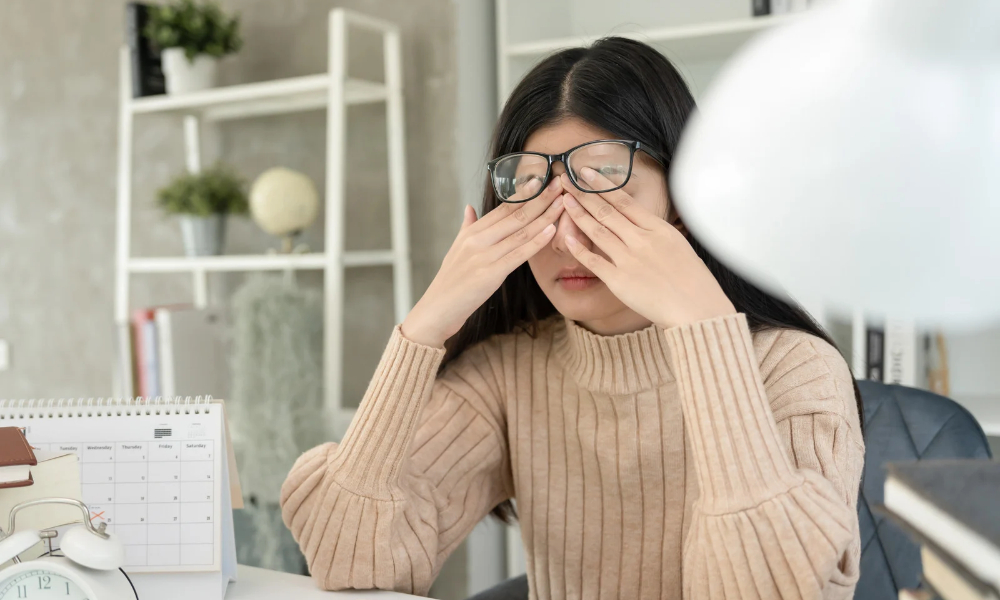
Wondering If ADHD Could Explain What You’ve Been Experiencing?
You do not have to figure it out alone. A comprehensive evaluation can help you understand your symptoms and discuss appropriate treatment options.
Frequently Asked Questions
What are the most common signs of ADHD in women?
Common signs can include forgetfulness, difficulty sustaining attention, disorganization, procrastination, poor time management, losing things, difficulty starting or completing tasks, distractibility, and feeling overwhelmed by multiple responsibilities. Some women also experience restlessness or impulsivity.
Can a woman have ADHD without being hyperactive?
Yes. Many women primarily experience inattentive symptoms. They may struggle with organization, memory, sustained attention, time management, and follow-through without obvious physical hyperactivity.
Why is ADHD often diagnosed late in women?
ADHD may be diagnosed later when symptoms are subtle, predominantly inattentive, or successfully masked through coping strategies. Increasing responsibilities during adulthood can also make previously manageable difficulties more noticeable.
Can perfectionism be a sign of ADHD in women?
Perfectionism is not itself a diagnostic symptom of ADHD. However, some women may develop perfectionistic coping strategies to compensate for difficulties with organization, forgetfulness, mistakes, or time management.
Can ADHD cause emotional overwhelm?
Some adults with ADHD report difficulty regulating intense emotions or becoming overwhelmed by competing demands. However, anxiety, depression, stress, trauma, sleep problems, and other factors can produce similar experiences.
Can ADHD symptoms change with hormonal changes?
Some women report changes in attention, mood, or other ADHD-related difficulties during hormonal transitions. Individual experiences vary, and hormonal changes can also affect sleep and mood independently of ADHD.
Can ADHD and anxiety occur together?
Yes. ADHD and anxiety can coexist, and their symptoms can overlap. A comprehensive evaluation can help determine which symptoms may be related to ADHD, anxiety, both, or another condition.
How is adult ADHD diagnosed in women?
An adult ADHD evaluation typically considers current symptoms, childhood history, functioning across settings, medical and psychiatric history, and possible alternative explanations. Rating scales may be used as part of the overall assessment.
What should I do if I think I have ADHD?
Consider discussing your symptoms with a qualified healthcare professional. Write down the difficulties you experience, when they began, how they affect work and relationships, and any relevant childhood history. This information can make an evaluation more productive.
The Bottom Line
ADHD in women can be easy to miss, particularly when symptoms are primarily inattentive or when a woman has spent years compensating for them.
Maybe you have always been forgetful but developed elaborate reminder systems. Maybe you procrastinate until deadlines create enough urgency to work. Maybe you appear organized while privately feeling overwhelmed. Maybe you are successful at work but exhausted by the amount of effort required to stay on top of everyday responsibilities.
None of these experiences automatically means you have ADHD.
But they are worth discussing if they are persistent and affecting your quality of life.
Understanding ADHD in women also means moving beyond stereotypes. You do not have to look like the stereotypical hyperactive child to have meaningful attention and executive-function difficulties.
A comprehensive evaluation can help distinguish ADHD from anxiety, depression, stress, sleep problems, and other potential causes. Most importantly, it can replace years of self-blame with a clearer understanding of what you are experiencing and what options may be available.
Medical Disclaimer: This article is intended for general educational purposes only and does not diagnose or treat ADHD or any other medical or psychiatric condition. Symptoms can overlap with several mental health and medical conditions. Speak with a qualified healthcare professional for an individualized evaluation and treatment recommendations.
0 Comments